





沿海城市社区韧性与灾后恢复:机构能力与安全
介绍
Puerto Vallarta stands as one of Mexico’s most resilient coastal destinations, where community strength and institutional capacity play pivotal roles in ensuring safety and recovery from natural challenges.
Recent events have underscored the importance of a well-coordinated approach to disaster management, highlighting how the blend of local efforts and structured support systems contributes to an environment where both security and opportunity coexist.
As a city constantly navigating the risks associated with coastal living, Puerto Vallarta showcases the dynamic balance between preserving its charm and enhancing its readiness for future challenges.
In exploring community resilience and disaster recovery in coastal municipalities, Puerto Vallarta offers a compelling case study of how prevention, resistance, and recovery efforts intersect.
The city’s ability to maintain a stable and secure environment amid socio-natural threats reflects broader trends seen in the region, where resilience is not just about bouncing back but adapting and strengthening in the face of adversity.
Understanding these mechanisms provides valuable insight into the ongoing development of the area, especially as it relates to sustainable growth and the growing real estate opportunities that attract both residents and investors alike.
Understanding Community Resilience and Disaster Recovery in Coastal Municipalities
Community resilience and disaster recovery in coastal municipalities is a complex process that involves the ability to prevent, absorb, and quickly recover from natural hazards such as hurricanes, floods, and landslides.
Coastal areas like Puerto Vallarta face frequent hydrometeorological events that challenge their infrastructure, economy, and social fabric.
Understanding resilience here means looking at how local institutions and communities work together to absorb these shocks and adapt to changing conditions without losing their core functionality or identity.
In practice, resilience is not just about bouncing back to a previous state but often about transforming and strengthening systems to better handle future threats.
Puerto Vallarta’s community resilience is rooted in its collective capacity to implement prevention measures, respond effectively during crises, and maintain security through coordinated efforts.
This involves not only government agencies but also local residents and businesses who play active roles in recovery processes, sharing resources, and supporting vulnerable groups.
Despite progress in risk reduction, many coastal municipalities still face medium levels of resilience because of fragile recovery capacities. This means that while there is some resistance to immediate impacts, the longer-term rebuilding and restoration require further strengthening.
For Puerto Vallarta, investing in institutional capacity, improving early warning systems, and fostering social cohesion remain critical to sustaining its security and resilience against socio-natural disasters.
These efforts ultimately help maintain the destination’s stability and open up opportunities for growth even in the face of environmental uncertainties.
Key Institutional Capacities Supporting Disaster Preparedness and Recovery
Puerto Vallarta’s ability to maintain safety and rebound swiftly from natural disasters is deeply rooted in its well-coordinated institutional frameworks.
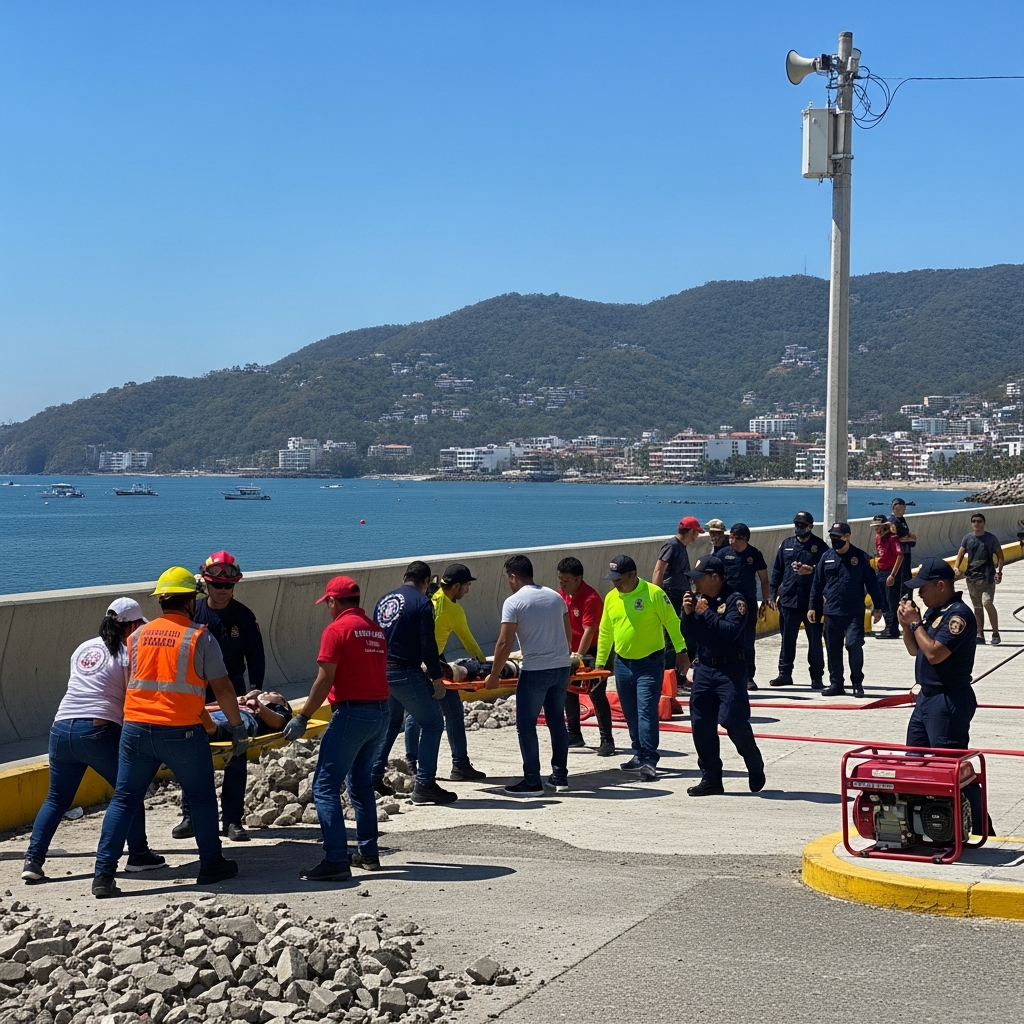
Local government agencies, emergency responders, and community organizations work closely to implement comprehensive disaster preparedness strategies.
This collaboration includes early warning systems, regular risk assessments, and community education campaigns that foster awareness and readiness among residents and visitors alike.
These efforts strengthen the community resilience and disaster recovery in coastal municipalities, ensuring the city is better prepared for any eventuality.
Another key element is the continuous investment in infrastructure and technology designed to mitigate disaster impacts. Puerto Vallarta has developed critical facilities and communication networks that enhance response times and resource management during emergencies.
The institutions involved are also dedicated to training their personnel and updating protocols based on lessons learned from past events. This proactive stance minimizes downtime in recovery and helps stabilize the local economy and social fabric after disruptions.
Importantly, the government promotes a culture of inclusiveness and empowerment by actively engaging citizens in resilience-building initiatives.
Community participation is harnessed to support not only prevention and resistance but also to facilitate recovery processes that are sensitive to local needs and contexts.
This integrated approach amplifies the institutional capacity to safeguard the municipality and fosters a collective commitment to sustainability and safety. Together, these capacities underpin Puerto Vallarta’s reputation as one of Mexico’s most resilient coastal destinations.
Challenges to Building and Sustaining Resilience in Coastal Communities
Building and sustaining community resilience and disaster recovery in coastal municipalities like Puerto Vallarta presents several intertwined challenges.
Coastal communities face constant threats from natural hazards such as tropical cyclones, floods, and landslides, which test the limits of local capacity and infrastructure.
Despite advances in prevention and emergency response, the ability to recover quickly remains weak due to resource constraints, growing population pressures, and the complexity of socio-environmental systems.
Another significant challenge lies in maintaining institutional capacity over time. Local governments and agencies must not only prepare for immediate risks but also plan for long-term resilience amid climate change and urban growth.
This requires continuous investment in training, technology, and community engagement, which can be difficult given budget limitations and competing priorities.
Ensuring coordinated efforts across different sectors and levels of government adds additional layers of complexity, often slowing decision-making and implementation.
Furthermore, social factors such as inequality, migration, and public awareness impact resilience building efforts. Vulnerable populations may experience disproportionate effects from disasters and have less access to recovery resources.
Community trust and participation are crucial for effective preparedness and resilience strategies, but they can be eroded by past experiences or misinformation.
In Puerto Vallarta, addressing these social dimensions alongside physical and institutional structures is vital to enhancing comprehensive resilience that can withstand future challenges.
The Role of Community Engagement and Social Networks in Enhancing Resilience
Community engagement plays a fundamental role in strengthening the resilience of Puerto Vallarta against natural disasters. Local residents are not only witnesses but active participants in shaping safety measures and recovery strategies.
Their firsthand knowledge of the environment and social dynamics allows for practical and context-sensitive responses to emergencies. This kind of involvement fosters a shared sense of responsibility that helps communities anticipate risks, respond effectively, and recover more quickly.
Social networks within the community further enhance resilience by creating strong bonds of trust and cooperation. These networks enable rapid communication and mobilization of resources during crises, ensuring that information flows smoothly among neighbors, local authorities, and emergency services.
In Puerto Vallarta, informal networks often supplement formal institutions, providing critical support to vulnerable groups who might otherwise be overlooked. This collective spirit is crucial in maintaining public order and minimizing chaos during disaster events.
Moreover, community resilience and disaster recovery in coastal municipalities like Puerto Vallarta are heavily influenced by the adaptive capacity that emerges from these social ties.
When people feel connected and supported, they are more likely to contribute to long-term recovery efforts and sustainable development planning. This interconnectedness also fosters innovation in disaster preparedness, with local initiatives often inspiring broader policy changes.
Ultimately, it is this dynamic interplay between engaged citizens and robust social networks that underpins the city’s ongoing security and resilience.
Strategies for Strengthening Security and Recovery Mechanisms in Coastal Municipalities
Community resilience and disaster recovery in coastal municipalities like Puerto Vallarta rely heavily on a coordinated combination of prevention, rapid response, and long-term recovery strategies.
One key approach is enhancing early warning systems that allow authorities and residents to prepare in advance for natural events such as tropical storms or heavy rainfall.
By investing in technology and communication networks, coastal towns can ensure timely alerts that minimize harm to lives and infrastructure.
Strengthening institutional capacity is also critical. Municipal governments need well-trained emergency response teams that can act efficiently during crises. This includes regular disaster drills and continuous training focused on both evacuation procedures and first aid.
Additionally, partnerships between public agencies, local businesses, and community organizations foster a collaborative environment where resources and information are shared effectively, supporting a more resilient recovery process.
Long-term resilience is enhanced through urban planning and infrastructure improvements designed to withstand natural hazards. This may involve constructing seawalls, improving drainage systems, and enforcing building codes that consider local risks.
Investing in social programs that educate and engage the population on disaster preparedness further reinforces security.
Together, these strategies build a foundation where community resilience and disaster recovery in coastal municipalities become a dynamic, inclusive process that protects people and promotes sustainable growth.
结论
Community resilience and disaster recovery in coastal municipalities is more than a technical challenge; it is a reflection of how deeply interconnected institutions and citizens are in safeguarding their shared future.
In places like Puerto Vallarta, the ongoing commitment to adapt, collaborate, and innovate demonstrates that security is not a static achievement but a continuous process shaped by collective responsibility.
The balance between preparedness, social cohesion, and responsive governance sets a foundation that not only protects lives and property but also nurtures opportunities for sustainable development.
Looking ahead, the resilience built today will determine how communities face evolving environmental and social pressures. Embracing inclusive approaches and strengthening ties between institutions and residents enhances the ability to recover and thrive amid uncertainties.
This shared journey highlights the importance of viewing disaster recovery not simply as a return to normality but as a chance to grow stronger, making coastal municipalities like Puerto Vallarta exemplars of enduring strength and hope.